Category: Legacy & Love | Motherhood & Moxie
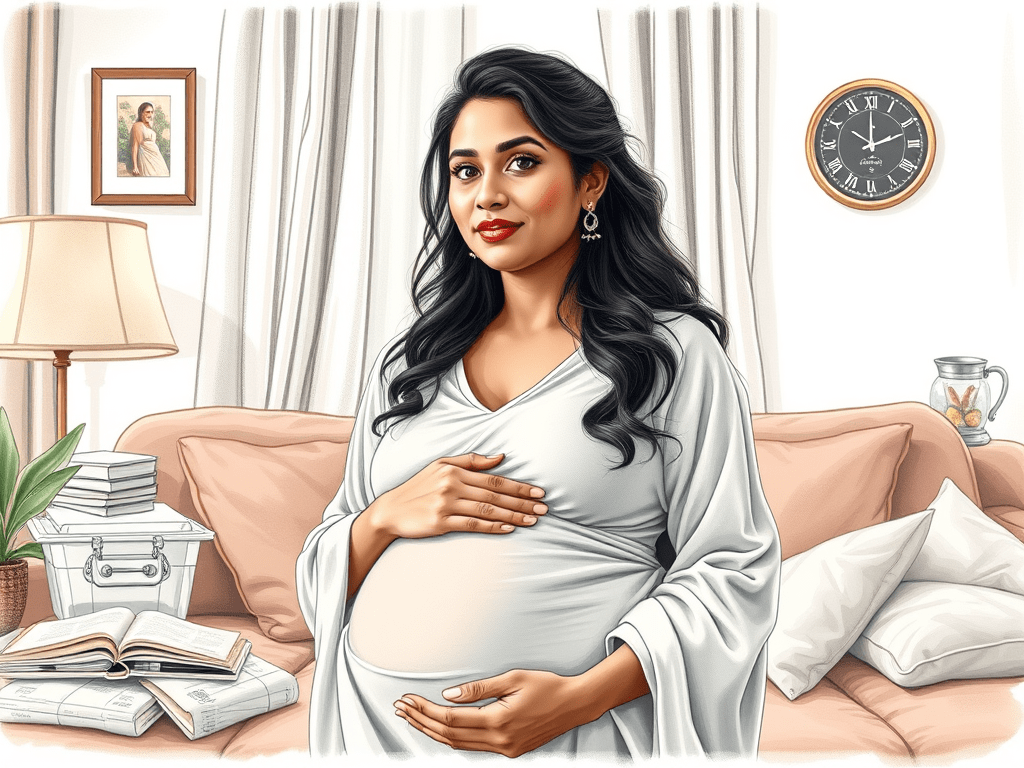
When people hear I’m becoming a single mother by choice, they often assume it’s rebellion.
For me, it feels more like inheritance.
I come from a family of quiet revolutionaries. My parents were born into a conservative Bengali society where women were expected to follow, not lead, and men were judged by status and tradition. But both of them dreamed bigger. They weren’t afraid to bend the rules and create their own path.
My mother grew up on a tea plantation in Sylhet, where daughters weren’t supposed to go far. Yet she boarded a plane to Minnesota to attend St. Benedict’s College—completely on her own, at a time when young women from her community rarely left home unchaperoned. Later, she became a journalist, determined to make her voice heard in a world that wasn’t used to women speaking up.
My father came from a modest middle-class family, but his brilliance and ambition carried him into one of the most elite roles in Bangladesh: as a CPS Officer. He broke barriers in government, business, and development, proving you could be both principled and pioneering.
They even married for love—a “love marriage,” which was practically its own revolution in the Bangladesh of their time. But love stories aren’t always simple. Their marriage ended, and in the 1980s, divorce carried heavy stigma. For me as a young girl, that stigma was especially sharp.
My father tried to shield me from it. He raised me to think and act like an “American” girl,independent, career-driven, and unafraid to dream big. Both my parents encouraged me to imagine a future where I could have both a career and a family. Secretly, I think they hoped I’d meet a white American boy in college who would support both.
And I met men—some wonderful, some not so wonderful. But life had other plans. When my father was diagnosed with dementia, and later my mother with kidney disease requiring dialysis three times a week, my priorities shifted. Caregiving came first. Then my career. Then caregiving again. Relationships took a backseat.
Somewhere along the way, I started talking to both my parents about becoming a single mother by choice. At first, they gently suggested adoption. Over time, they came to accept the idea of me carrying a child. In my head, I imagined this as another journey I’d take with my father, just as I had built my career with him. But COVID came, his dementia worsened, and I lost him before this dream could begin.
I’ve told my immediate family and my “American” community about my pregnancy, but I’ve held back with extended family and Bengali friends. My brother is deeply supportive, but he worries. He remembers how hard it was for me as a teenager, navigating the stigma of being a daughter of divorced parents. He fears that being too open will pull me back into that place.
So yes, eyebrows have been raised. In my community, family is still expected to follow a very specific order: marriage, then children. Skipping steps—or writing your own script—still feels disruptive. But I don’t see my choice as rebellion. I see it as continuing what my parents started.
My mother once told me: “Your life should be an example, not an explanation.” My father showed me that love and service can take many forms. And so here I am—choosing motherhood on my own terms, walking in their footsteps even as I make my own.
This baby isn’t just the start of my motherhood journey. It’s the next chapter in a family story of rule-breakers, risk-takers, and love that always made room for something bigger than itself.


 Bureaucrat to Baby Steps
Leave a comment