Before I became a mother, I thought I understood the value of mother’s groups.
During my time working as a Food for Peace officer, I managed programs in developing countries where mother’s groups were an important part of the program design. They were spaces where women came together to learn about nutrition for themselves and their children, share advice, and support one another. In many underserved communities, these groups created a safe space where women could build trust and strengthen social bonds while improving health outcomes for their families.
Professionally, I saw their impact.
But personally, I had a very different perception of what mother’s groups in the United States were like.
In my mind, they were code for a mom’s wine club—casual social gatherings that didn’t necessarily offer the kind of support I imagined mothers in other parts of the world relying on. More recently, public conversations about motherhood, including commentary about toxic dynamics in parenting spaces, reinforced my skepticism.
So when a woman from the SMBC Facebook group, who had been incredibly generous with her time during my pregnancy, recommended a mother’s group called PACE, I was curious but cautious. She told me how valuable it had been for her when she had her child and how the bonds she formed with the other mothers had lasted long after the group ended. She even gave me a referral to the organization where she had worked, which felt like such a kind gesture.
Still, I wasn’t sure what to expect.
It turns out I was wrong.
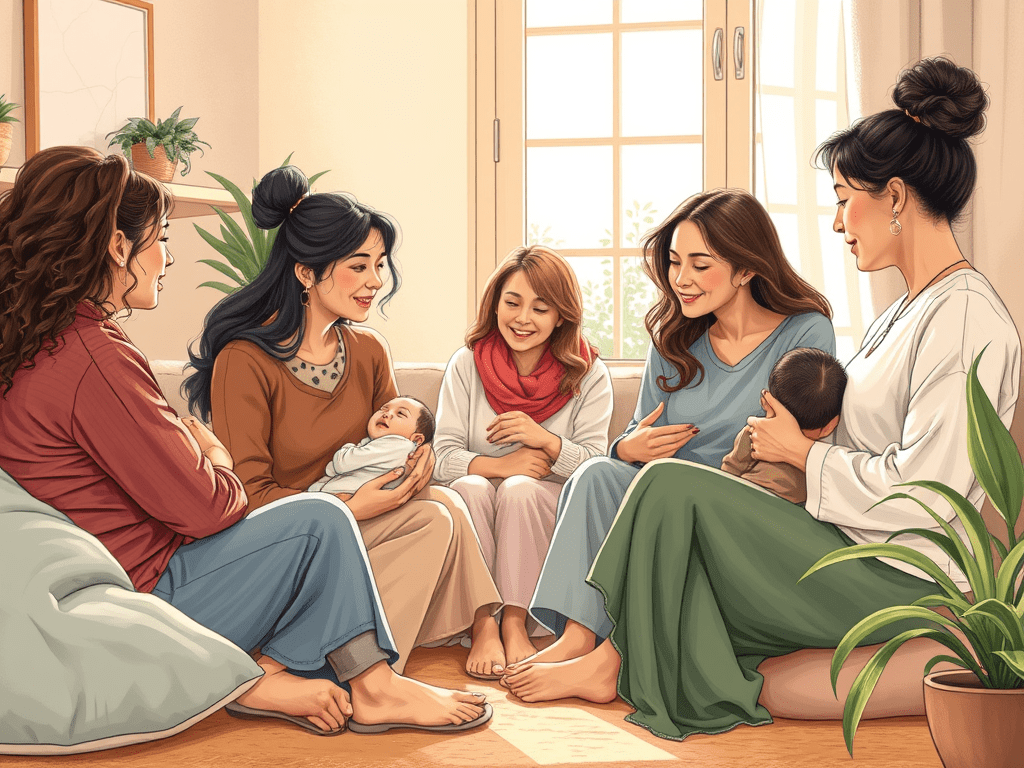
My PACE mother’s group has been one of the most meaningful parts of my postpartum experience. It has become a place where I’ve learned from other mothers about how they are bonding with their babies, navigating the stressors of early motherhood, and celebrating the small victories that come with caring for a newborn.
More importantly, it has been a space where honesty is welcomed.
In our conversations, we talk openly about both the highs and the lows of motherhood. Hearing other women share their experiences has helped me realize how many of the feelings I’ve had are normal, even the ones that are hard to admit.
For example, during my pregnancy I didn’t feel an immediate emotional connection with my baby. I felt guilty about that at the time, wondering if something was wrong with me. But in my mother’s group, I learned that several other women had felt the same way and didn’t fully bond with their babies until after they were born.
That conversation alone lifted a weight I didn’t realize I was carrying.
The group has also been a gentle way to step back into the world.
Some of my first public outings with my baby have been with these mothers. Being in a group where everyone understands the logistics of caring for an infant—feeding schedules, diaper changes, unpredictable crying—has made those outings feel safe rather than stressful. I don’t worry about breastfeeding or changing my baby in public when I’m with them because everyone is navigating the same realities.
It’s also been a space where I’ve been able to do things that once felt intimidating, like going out to a restaurant with a baby for the first time. Doing that alongside other mothers who are figuring it out too makes it feel less overwhelming.
In many ways, this group has become a support system that sits somewhere between friendship and community care.
It has been good for my mental health, and it hasn’t hurt that every week I get to spend time with eleven other adorable babies.
Looking back, I realize that what I once understood as a programmatic intervention in my professional life is something much more personal in my life now.
Mother’s groups are not just about exchanging tips or learning about childcare. They are about creating spaces where women can be honest about the realities of motherhood and remind one another that they are not alone. And sometimes, that reminder is exactly what you need.
Being part of this mother’s group has reminded me how important it is to have support systems, both emotional and practical, during the postpartum months. But motherhood also makes you confront the ways your own body has changed, and how much rebuilding strength matters—not just for caring for your baby, but for your own well-being. In the next post, I’ll share my journey through postpartum physical therapy and what it’s really like to relearn strength after birth.

 Bureaucrat to Baby Steps
Leave a comment