Part of the series Work, Care, and the Missing Middle
There is a point where caregiving stops being one role and becomes many.
It is not always a clear transition. It happens gradually. A doctor’s appointment here. A check-in call there. A shift in responsibility that at first feels temporary, until it is not.
For many people, this is what it means to be part of the sandwich generation.
Caring for children while also caring for aging parents or relatives.
Holding both at the same time.
When caregiving overlaps
For a long time, we have thought about caregiving in separate phases.
You care for young children at one stage of life. You care for aging parents at another.
But that is increasingly not how life unfolds.
People are having children later. At the same time, people are living longer, often with more complex health needs. The result is an overlap that many families are navigating in real time.
It is not one or the other.
It is both.
What this looks like in real life
I have experienced parts of this at different moments in my life.
As I wrote in an earlier post last year, when my father developed dementia, I was largely managing his care on my own. At the time, my brother had younger children and was not in a position to take on as much of the day to day responsibility.
I was also working full time in emergency food assistance. The demands of that work were high, often unpredictable, and deeply consuming. At the same time, I was trying to understand my father’s diagnosis, coordinate his care, and be present with him in a meaningful way.
There was no clear boundary between those responsibilities.
Now, that dynamic has shifted.
My brother’s children are older, and he has taken the lead in caring for my mother. At the same time, I now have an infant.
In a few months, I know I will need to re-transition back into a more active caregiving role to support him. Not in the same way as before, but enough to give him some respite. To allow him time to take care of his own needs and to have space for a mental break.
It will not be as constant or as physically demanding as caring for my father was.
But it will still require time, coordination, and emotional energy.
And doing that while caring for a baby brings a different kind of complexity.
The invisible complexity of dual caregiving
What makes this dynamic so challenging is not just the number of responsibilities. It is how unpredictable they are.
Childcare has structure, even when it is demanding. There are routines, schedules, and systems that, once in place, provide some level of stability.
Elder care is different.
Needs can change quickly. Health can decline unexpectedly. Decisions are often more complex and more emotionally charged. There are fewer clear systems to rely on, and much of the coordination falls on family members.
For those balancing both, the mental load increases significantly.
It is not just about time. It is about constant awareness, planning, and adjustment.
Work was not designed for this
The structure of most professional jobs assumes consistency.
Consistent hours. Consistent availability. Consistent output.
But caregiving, especially when it spans multiple roles, is anything but consistent.
Doctor’s appointments do not align with meeting schedules. Care needs do not follow predictable timelines. Emergencies do not wait for convenient moments.
And yet, many workplaces still operate as if they do.
This creates a constant tension.
Not because people are unwilling to work, but because the structure of work does not reflect the realities they are managing outside of it.
The workforce impact
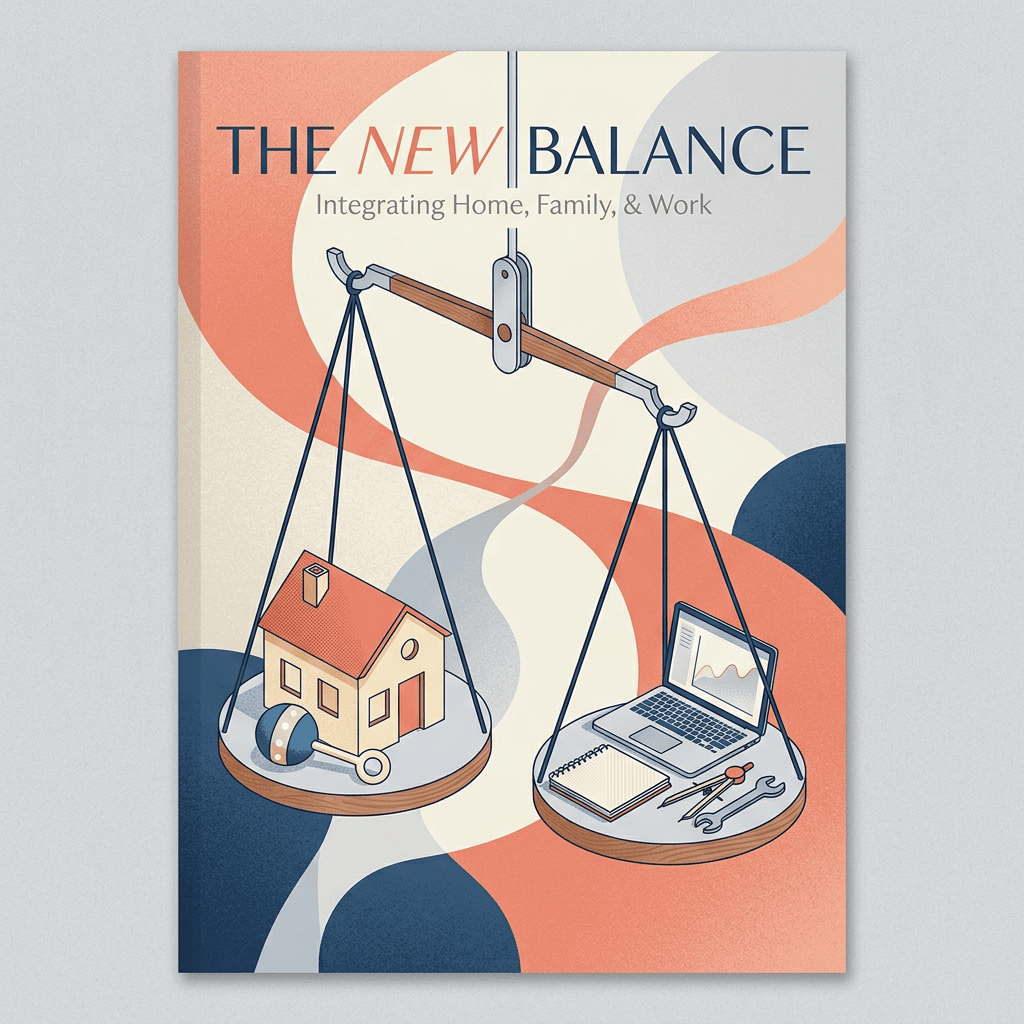
The rise of the sandwich generation is not just a demographic trend. It is a workforce issue.
As caregiving responsibilities expand, more professionals find themselves needing flexibility that traditional roles do not provide.
Some reduce their hours. Some shift into less demanding roles. Some leave the workforce entirely.
Research from Catalyst and others shows that caregiving continues to shape workforce participation, particularly for women.
But this is not just about childcare.
It is about the cumulative weight of caregiving over time.
The missing middle, again
Across this series, one theme keeps emerging.
There are very few options between full time work and stepping away.
This gap becomes even more visible for those managing dual caregiving responsibilities.
What would it look like to have roles that allow for fluctuation?
To have schedules that can adapt as caregiving needs change?
To have professional pathways that recognize that capacity is not always constant, but that expertise and value remain?
These are not abstract ideas.
They are practical responses to how people are actually living.
What would make a difference
Supporting the sandwich generation requires a broader approach to both policy and workplace design.
Expanded access to affordable childcare remains essential.
But so does greater support for elder care, including services, caregiver support programs, and policies that recognize the time and financial costs involved.
At the same time, workplaces need to move beyond rigid structures.
Flexible schedules, remote options, and fractional roles are not just conveniences. They are necessary tools for retaining experienced professionals.
The opportunity ahead
The number of people navigating overlapping caregiving responsibilities is growing.
But the systems meant to support them have not kept pace.
This creates a quiet but significant loss.
Of talent. Of experience. Of people who want to contribute, but need work to look different than it does today.
The question is not whether caregiving will shape the workforce.
It already is.
The question is whether the structure of work will evolve enough to meet that reality.



Leave a Reply