I always thought I would have two children.
Not just two, but a specific version of two. A boy first, about 18 months older than a girl. Close enough in age to share everything. Close enough to grow into each other’s emotional safety net long after I am gone.
I was not just imagining siblings. I was imagining continuity. A built in support system. The kind of relationship that carries you through grief, financial hardship, and the quiet stretches of adulthood.
In many ways, I was trying to recreate what I had.
But life did not follow that timeline.
When Reality Rewrites the Plan
I had my daughter later than I expected. By the time she arrived, the math had changed.
Raising two children in my 40s, largely on my own, without the stability of the federal career I once relied on, stopped feeling like a stretch goal and started feeling unrealistic.
Not impossible. But unsustainable.
And there is a difference.
So I told myself one is enough. One is good. One is what I can do well.
And for many women like me, that is not just a personal decision. It is a structural one.
The rise of single mothers by choice, delayed parenthood, and economic instability has quietly reshaped what family planning looks like in this country. We do not talk about it enough, but more women are making intentional decisions to have one child not because they lack desire, but because they are doing the math honestly.
The Fear That Does Not Go Away
Then life shifted again.
Losing my dad.
Stepping into the reality of my mom’s aging and care needs.
Those experiences brought up a fear I cannot quite shake.
What happens when my daughter has to do this alone?
She will not have a sibling to share the weight. No one to split decisions with. No one who understands, in the same cellular way, what it means to lose me.
Her cousins are 14 and 20 years older. They will not grow up alongside her.
And while chosen family has been one of the greatest gifts of my life, I have also seen something else during hard times.
When things fall apart financially or logistically, blood family often shows up differently. Not better, but differently. And sometimes, more reliably.
That realization sits heavy.
What the Data Actually Says
And yet, the data tells a more reassuring story than the one fear creates.
Only children today are just as well adjusted as children with siblings. Studies consistently show they perform similarly on measures of emotional well being, social skills, and academic achievement. In some cases, only children benefit from more parental attention and resources, which can translate into higher confidence and independence.
The same is true for children of single mothers by choice. Research over the past decade has found that these children are thriving emotionally and behaviorally, with strong parent child bonds and no significant differences in development compared to children in two parent households.
In other words, the life I am building for my daughter is not a deficit model.
It just looks different than the one I imagined.
The Gap Between Policy and Reality
Where the tension remains is not in the outcomes for children. It is in the lack of structural support for parents.
If we had more affordable childcare, more flexible work arrangements, stronger caregiving policies, and real economic stability, more women would have the option to choose a second child without it feeling like a personal risk calculation.
Instead, many of us are quietly making constrained choices and then carrying the emotional weight of them as if they were purely personal.
This is not just about family size. It is about the absence of systems that make family expansion sustainable.
The Guilt of Knowing Your Limits
The truth is, I do not have the bandwidth for another child.
Not physically.
Not emotionally.
Not financially.
And knowing that does not erase the guilt.
Because it feels like a decision I am making for her. About what kind of life she will have. About whether she will feel alone one day.
There is a quiet tension between what I can give and what I wish I could give.
And there is no clean way to resolve it.
The Question I Did Not Expect
And then there is the embryo.
When I created it, the decision felt procedural. A future option.
At first, I thought I would dispose of it.
But now, after pregnancy and motherhood, nothing about it feels simple.
I find myself asking questions I did not expect.
Is it just a cluster of cells?
Or does it hold something more?
I am still pro choice. That has not changed.
But lived experience has complicated how I feel, even if it has not changed what I believe.
When Policy Becomes Personal
Embryo disposition is often discussed in legal or ethical terms. Storage limits. Consent forms. Clinical protocols.
But for the people living it, it is none of those things.
It is emotional. It is spiritual. It is deeply personal.
Donation sounds straightforward in theory. But in practice, it means there could be a biological child of mine in the world, raised by someone else.
And I do not know if I can carry that.
This is where policy frameworks fall short. They can outline options, but they cannot account for the emotional reality of choosing between them.
Sitting in the In Between
There is no clean ending to this.
Just a set of truths I am holding at the same time.
I am deeply grateful for my daughter.
I am at peace with being one and done and also not fully at peace.
I trust my capacity and grieve its limits.
I believe in choice and feel the weight of this one.
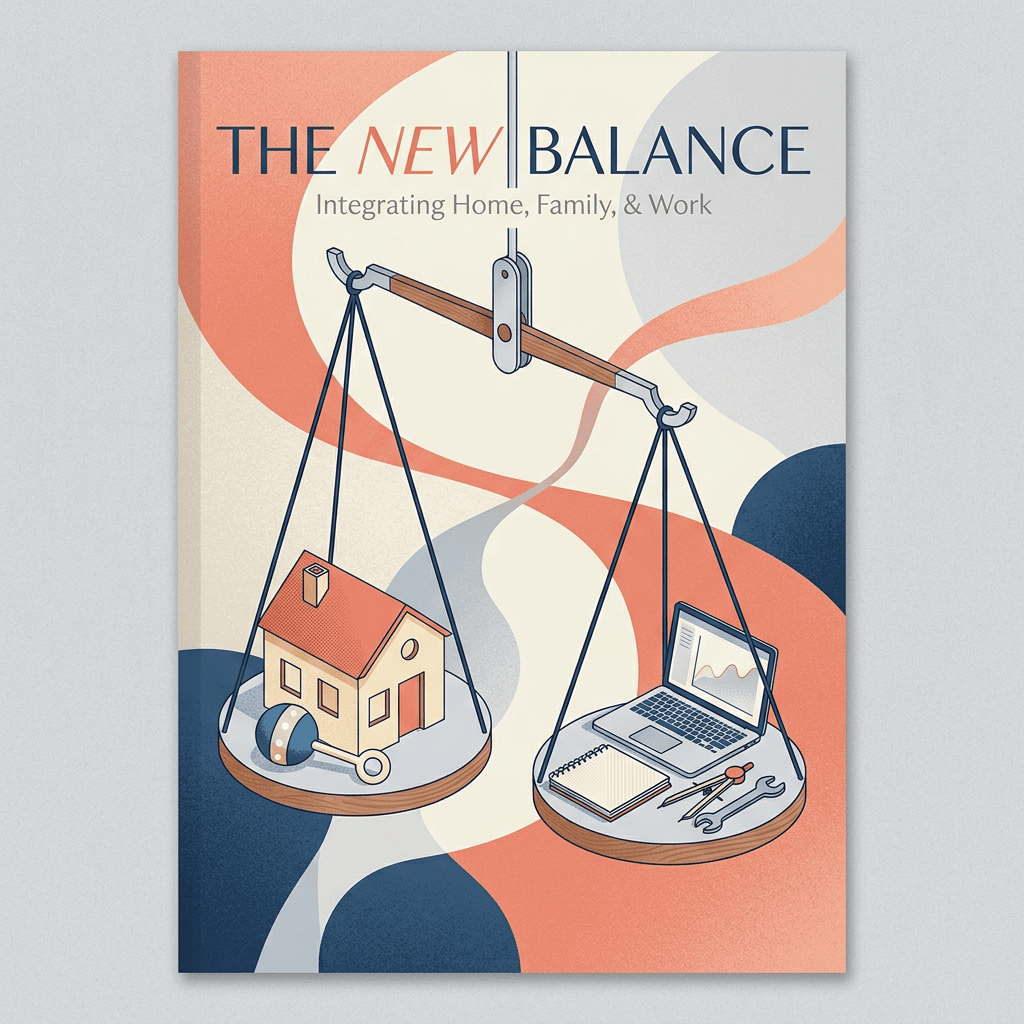
If there is anything I have learned, it is that modern motherhood is not just about what we choose.
It is about what is structurally possible.
And sometimes, the most honest place to land is not certainty, but acknowledgment.



Leave a Reply