Final piece in the series Work, Care, and the Missing Middle
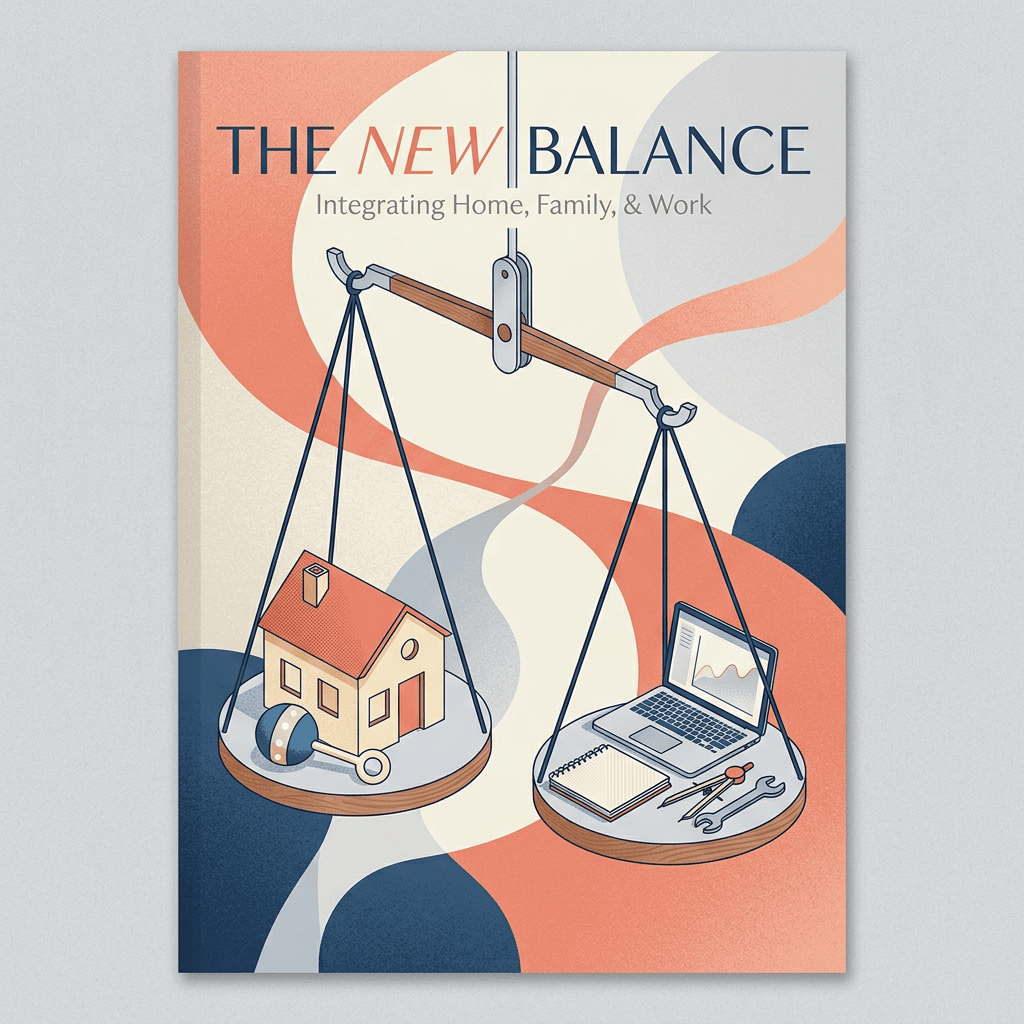
For too long, the structure of work has assumed something that is no longer true.
That most workers have uninterrupted availability.
That caregiving happens outside of professional life.
And that productivity can be measured primarily in hours spent at a desk.
These assumptions are quietly breaking the modern workforce.
Not in a single moment, but in accumulation.
Through rising childcare costs, aging populations, inflexible jobs, and now the accelerating impact of artificial intelligence.
The result is a widening gap between how people actually live and how work is designed.
I have experienced that gap from different sides over time.
While caring for my father through dementia, I was working full time in emergency food assistance. The demands of both roles were not just difficult to balance—they were structurally incompatible. There were no flexible pathways that allowed me to do both well.
Today, I see that same tension differently as I raise an infant and prepare to re-engage with caregiving responsibilities for my family in a different way.
The context has changed. The pressure has not.
The missing middle in the workforce
Across this series, one pattern has become clear.
The modern labor market is built around a binary choice.
Full time work or exit.
There is very little infrastructure in between.
That missing middle is where most of the pressure is now concentrated.
It is where caregivers, particularly women, are pushed out of the workforce not because they lack skill or ambition, but because the structure of work does not accommodate the realities of care.
It is also where we are losing experienced professionals, institutional knowledge, and leadership capacity at scale.
This is not a marginal issue.
It is a structural one.
Why AI changes the equation—but does not solve it
Artificial intelligence is often discussed in terms of job loss or efficiency gains.
But its deeper impact is more important.
AI reduces the time required for many forms of production work—drafting, summarizing, organizing, and processing information.
That shift creates an opening.
If work can be done faster, then the assumption that all roles must be structured around full time hours becomes less defensible.
But AI alone does not redesign work.
It can either reinforce existing expectations—more output, same structure—or it can enable something more significant.
A shift from work defined by time to work defined by contribution.
Judgment. Strategy. Context. Human experience.
The parts of work that AI cannot replicate.
What this means for employers and the economy
There is a tendency to frame flexibility as a cost.
But in practice, it is a retention strategy.
When professionals are able to work in ways that reflect their lives, they are more likely to remain in the workforce. More likely to contribute consistently. More likely to stay engaged over time.
For employers, this translates into lower turnover, stronger institutional continuity, and access to a deeper talent pool of experienced professionals who might otherwise leave entirely.
AI, by reducing administrative burden, makes this model more feasible—not less.
There is also a broader economic impact.
When caregivers are able to stay connected to work, they continue earning income that is reinvested into housing, childcare, healthcare, and local economies.
At the same time, sustained workforce participation reduces pressure on public assistance systems that increasingly absorb the cost of labor market exit driven by caregiving constraints.
In other words, this is not only a workforce issue.
It is an economic stability issue.
A system designed for a different era
The core problem is not individual choice.
It is structural design.
Work was built for a model of life that no longer reflects reality.
In that model, caregiving was invisible or externalized. Availability was assumed. Flexibility was rare. And full time work was the only acceptable standard of professional participation.
That model no longer fits.
And the consequences are becoming harder to ignore.
What a modern workforce must include
A functioning modern economy needs more than just innovation in technology.
It needs innovation in structure.
That means:
Work designed around contribution, not just hours.
Legitimate pathways for fractional and flexible professional roles.
Childcare and elder care systems that reflect the real cost of care.
And workplaces that treat flexibility not as an exception, but as infrastructure.
These are not abstract policy ideas.
They are the conditions required to retain talent in a labor market shaped by caregiving and demographic change.
The real question ahead
The question is not whether people want to work.
They do.
The question is whether work will evolve enough to allow them to stay.
Because what is being lost today is not motivation.
It is fit.
And when systems lose fit, they lose people.
Closing
There is nothing inevitable about the way work is currently structured.
It was built in a different time, around different assumptions.
Which means it can be rebuilt.
The missing middle is not a niche problem.
It is the next frontier of workforce design.
And whether we address it will determine not just who participates in the economy, but how sustainable that economy actually is.



Leave a comment